
Lead sheet in radiation protection — how does the radiation barrier work?
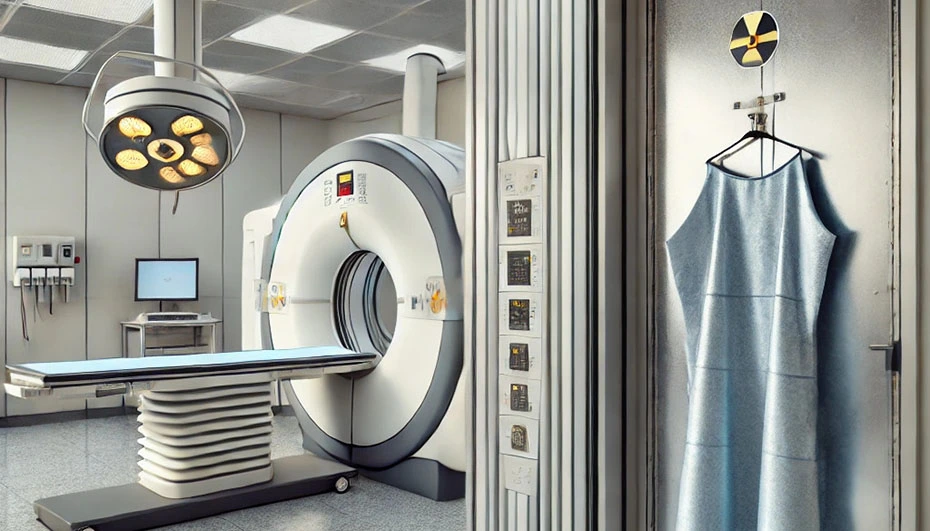
Radiation protection plays a key role in medicine, industry, and scientific research, where ionizing radiation is widely used. Lead sheets, due to their exceptional physical properties, are one of the most effective materials for shielding against radiation. In this article, we will explore how this barrier works and why lead sheets are the best solution for radiation protection.
Why are lead sheets an effective protective material?
Lead sheets, thanks to the unique properties of lead, are an ideal material for radiation protection. Lead’s high density and atomic mass make it an effective barrier against various types of radiation.
What is ionizing radiation?
Ionizing radiation is a type of electromagnetic or particulate radiation capable of ionizing atoms and molecules in matter. It comes in different forms, such as alpha, beta, gamma radiation, and X-rays. While it has wide applications in medicine (e.g., X-ray diagnostics and oncology therapy), it can also pose health risks, especially with prolonged exposure.
Effects of radiation on the human body
Ionizing radiation penetrating body tissues can damage DNA, leading to mutations, cancers, and other serious conditions. That’s why effective protective barriers are essential, especially in environments where medical personnel and patients are regularly exposed to radiation.
Physical properties of lead in the form of lead sheets
Lead (Pb) is one of the heaviest elements with a high atomic mass (207.2 u) and a density of 11.34 g/cm³. Its high density makes it an excellent material for absorbing and blocking ionizing radiation, including gamma and X-rays.
Properties that make lead the ideal protective material:
- High density – the higher the density, the more radiation it can stop.
- Atomic structure – lead has a relatively large atomic size, which favors radiation absorption.
- Ease of forming – lead sheets are easy to shape, allowing the creation of various protective forms, from shielding walls to personal protection.
How do lead sheets work as a radiation barrier?
Lead sheets act as a protective barrier by absorbing and scattering ionizing radiation. Radiation striking the surface of a lead sheet is partially absorbed, reducing the intensity of the radiation that penetrates further. The thicker the lead layer, the greater the protection.
Lead sheet application in medicine
Lead sheets are widely used in medical radiation protection. Their primary function is to protect patients and medical personnel from the harmful effects of ionizing radiation. Below, we highlight the various medical applications of lead sheets.
Lead sheets in medical personnel protection
Medical personnel working regularly with radiation must be properly protected. Besides walls and shields made from lead sheets, personal protective equipment using lead, such as protective aprons, thyroid shields, and goggles, is also available.
Lead sheets vs. other protective materials – why lead is still the best choice?
Although there are many alternative radiation shielding materials on the market, lead sheets remain one of the best choices. Their effectiveness stems from lead’s unique properties, which surpass other materials in terms of radiation attenuation and cost-efficiency.
Lead foil – a lightweight protective solution
In some cases, lead foil is also used as a protective measure, providing similar functionality but in a more flexible and thinner form. Despite its reduced thickness, lead foil offers sufficient protection in many scenarios, especially where radiation levels are lower.
Summary
Lead sheets play a crucial role in radiation protection. With their exceptional physical properties, such as high density and the ability to absorb ionizing radiation, lead is an indispensable material for protecting patients and medical personnel. While alternatives like concrete or composite materials exist, lead sheets remain the best choice due to their effectiveness and versatility.


